C. Wright Mills Award, Finalist – Society for the Study of Social Problems
Roberto Reis Book Award, Honorable Mention – Brazilian Studies Association
Gordon Hirabayashi Human Rights Book Award, Honorable Mention – Sociology of Human Rights Section, American Sociological Association
Edwin H. Sutherland Book Award, Honorable Mention – Law and Society Division, Society for the Study of Social Problems
ISA International Political Sociology Section Book Award, Winner – International Studies Association
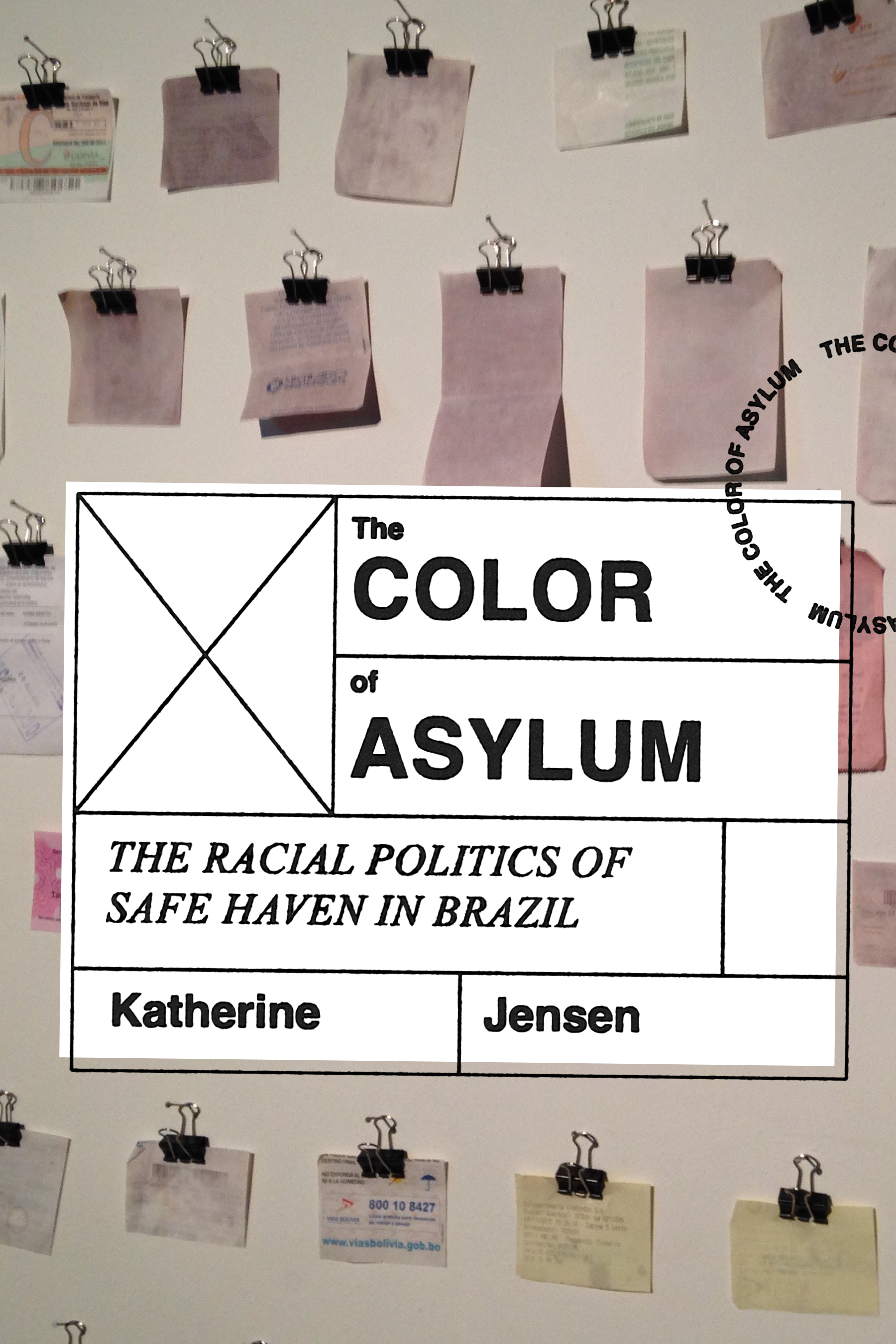
In 2013, as Syrians desperate to escape a brutal war fled the country, Brazil took the remarkable step of instituting an open-door policy for Syrian refugees. Why did Brazil—in contrast to much of the international community—offer asylum to any Syrian who would come? And how do their experiences differ from other refugee populations seeking status in Brazil? The Color of Asylum offers an ethnographic look at the process of asylum seeking in Brazil, uncovering the different ways asylum seekers are treated and the racial logic behind their treatment. It focuses on two of the largest and most successful groups of asylum seekers: Syrian and Congolese refugees. While they obtain asylum in Brazil at roughly equivalent rates, their journey to that status could not be more different, with Congolese refugees enduring significantly greater difficulties at each stage, from arrival through to their treatment by Brazilian officials. Syrians, meanwhile, receive better treatment because the Brazilian state sees them as white, in a nation that has historically privileged white immigration. However, regardless of their country of origin, even migrants who secure asylum status find their lives remain extremely difficult, marked by struggle and discrimination.
Praise for The Color of Asylum
Grounded on an impressive array of archival data, legal materials, and the keenest of ethnographies, The Color of Asylum renders accessible the complexities of the asylum bureaucracy. With subtlety and thoughtfulness, and weaving specificity with larger trends, Jensen shows us that even in the inclusive policy context of Brazil, racial logics structure how asylum is understood and experienced and how racialized hierarchies are produced through bureaucratic practices. This beautifully written book is a critical contribution and a must-read. I highly recommend it.
Cecilia Menjívar, Dorothy L. Meier Social Equities Chair and Professor of Sociology, University of California, Los Angeles
With clarity and ethnographic rigor, The Color of Asylum documents how Brazil’s seemingly open asylum policy follows the historical racial project of the nation-state. Asylum seekers read as white are treated with dignity, while those framed as Black are subjected to indignities. I highly recommend this book to readers interested in race matters in Latin America as well as to race scholars in general.
Eduardo Bonilla-Silva, James B. Duke Distinguished Professor of Sociology, Duke University
Brazil’s high rate of granting asylum to Syrians and Congolese superficially suggests that a racial democracy is protecting refugees. Jensen’s ethnographic deep dive shows that underneath the surface of simple statistics and public pronouncements, the asylum process is saturated with racial inequalities.
David Scott FitzGerald, Co-Author of The Refugee System: A Sociology Approach
While Brazil can rightfully boast of a generous refugee policy, the workings of its asylum process reveal the country’s institutional and interpersonal racism. Katherine Jensen’s Color of Asylum follows Syrian and Congolese escapees from their country’s wars to incisively describe how Brazil’s asylum system differentially treats the two groups. This is the latest chapter in Brazil’s long, fascinating, and racialized immigration history.
Edward Telles, Distinguished Professor of Sociology, University of California, Irvine
An essential contribution to urgent debates far beyond Latin America about how we treat migrants and how even the global good of asylum is politicised and racialised in subtle ways that reproduce discrimination.
The Latin American Review of Books
The Color of Asylum is a vital contribution to the study of race and asylum, offering a nuanced critique of how racial hierarchies persist within humanitarian frameworks. Jensen’s ethnographic approach provides a rich, detailed account of how asylum functions as a racial project, shaping the experiences and futures of those seeking refuge. This book is essential reading for scholars and practitioners interested in migration studies, critical race theory, and the politics of humanitarianism. By exposing the hidden racialized mechanisms of asylum, Jensen forces us to reconsider the very foundations of what it means to offer refuge.
American Journal of Sociology
Through a comparative analysis of Syrian and Congolese refugees, Jensen meticulously shows how whiteness and anti-Blackness are constructed within the asylum process. The book makes important contributions across multiple fields, including immigration studies, race and ethnicity, and global and transnational sociology.
Social Forces
Jensen artfully demonstrates how racialization is embedded in every step of Brazil’s asylum process… The Color of Asylum provokes important questions about racialized political violence and the ways in which seemingly inclusive regimes and policies can continue to produce racial domination… this book makes a strong start for thinking about the migration histories and the various racial formation projects in the region.
 KATHERINE JENSEN